Florentia
The Roman forum
The area coincides with the heart of the Roman city. The north-south axis, still readable between via Roma and via Calimala, crossed here the east-west axis.
From the heart of Roman Florentia to the Old Market, from the 19th-century Risanamento to today’s urban salon: one square tells almost two thousand years of Florence’s centre.
Welcome to Piazza della Repubblica, widely recognized as the central square and “salon” of Florence’s historic centre, in Tuscany, Italy. It is a natural hub for travellers visiting the city and a key point on the pedestrian route between the station, the Duomo and Piazza della Signoria.
Here the cardo and the decumanus of the Roman city once crossed. The Column of Abundance still preserves in the urban landscape the memory of that ancient centre.
The present square is not an unchanging backdrop: it is the result of urban transformations that erased, rebuilt and reinterpreted the city centre.
The area coincides with the heart of the Roman city. The north-south axis, still readable between via Roma and via Calimala, crossed here the east-west axis.
For centuries the fabric was extremely dense: workshops, tower-houses, the Old Market and the Jewish ghetto occupied the central area.
In the climate of the great transformations begun when Florence was capital of Italy, the centre was deeply rethought; the 19th-century demolitions radically changed the district.
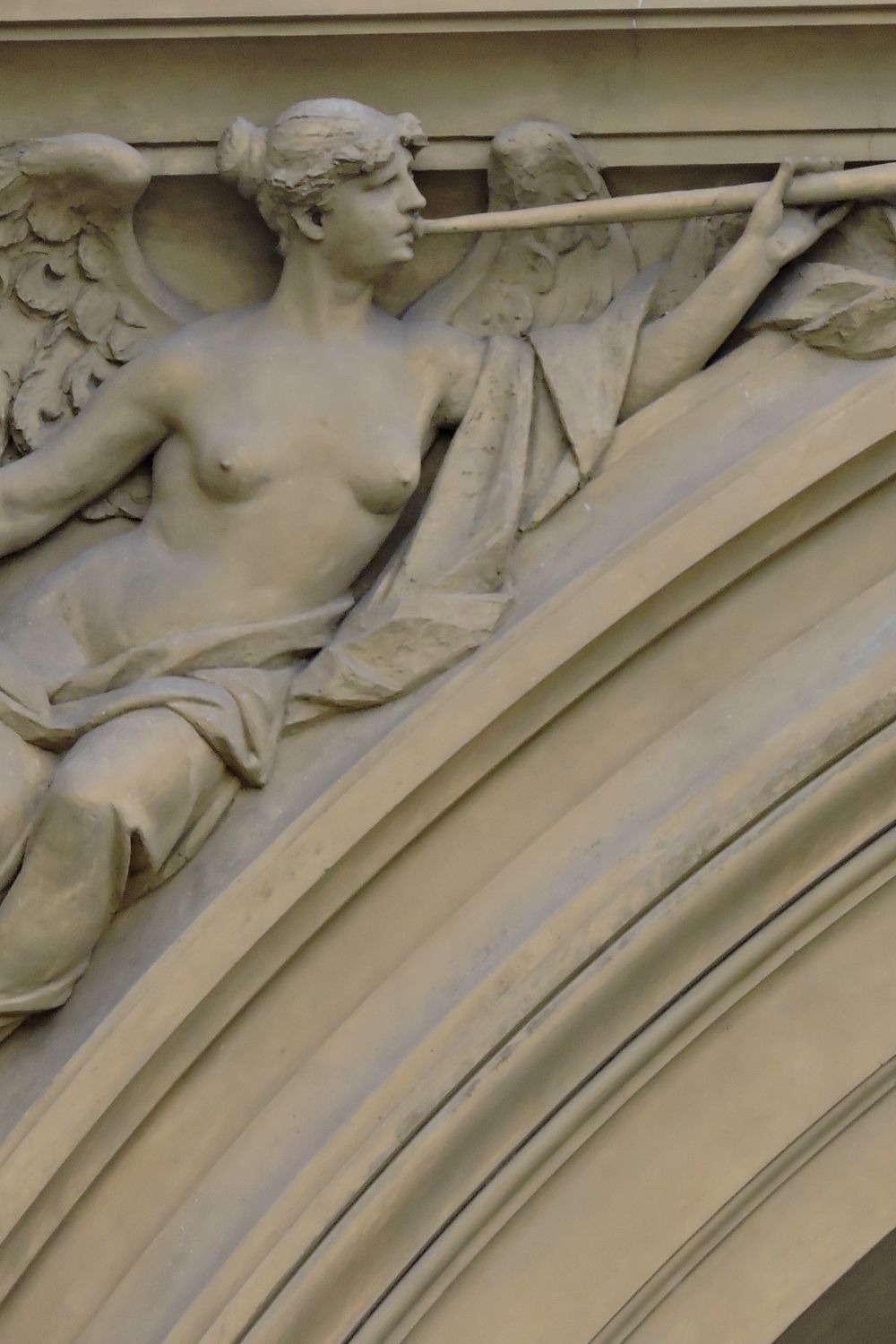
The great monumental arch on the western side, designed by Vincenzo Micheli, defines one of the most recognisable edges of today’s square.
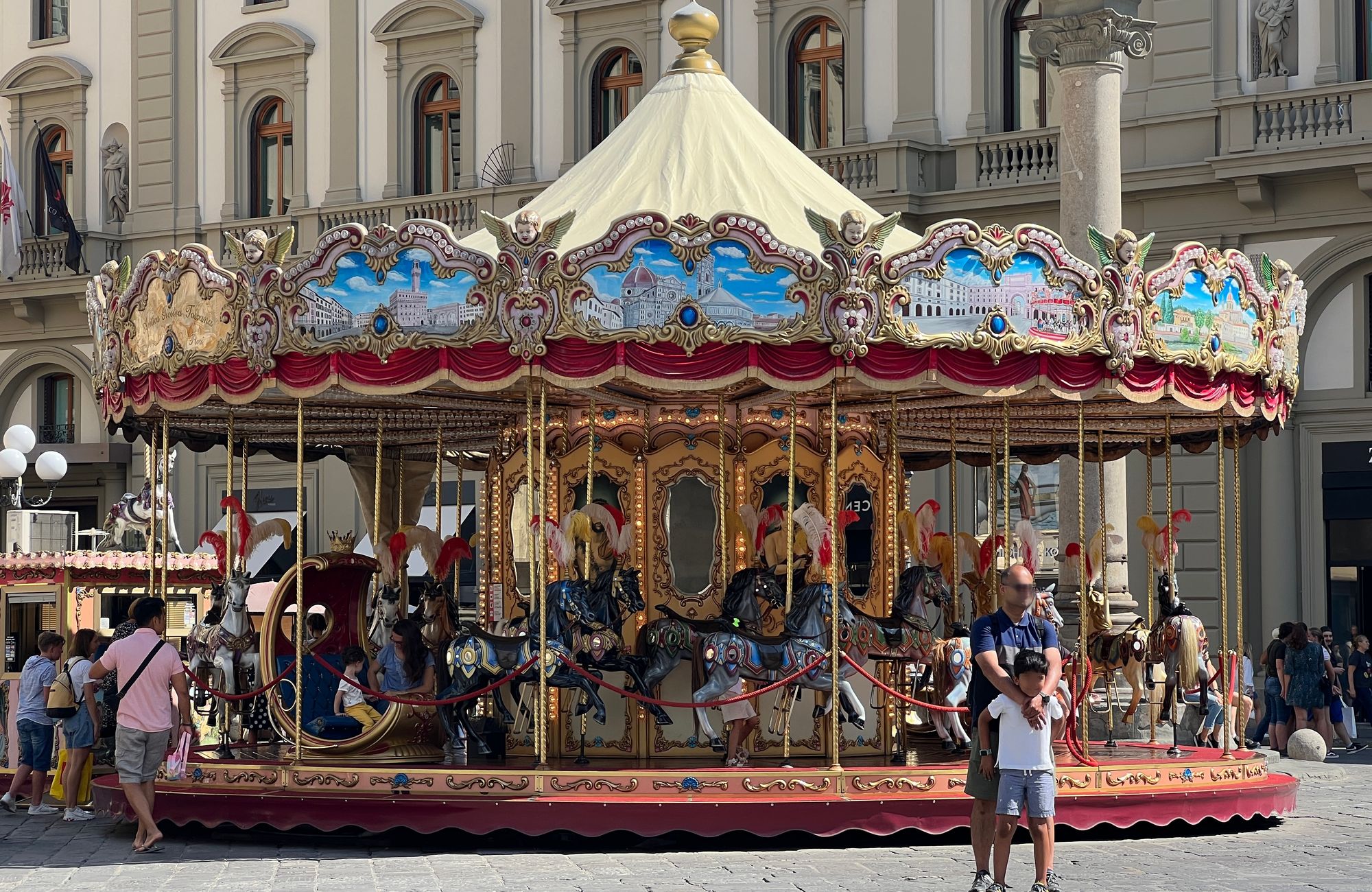
The Column of Abundance, the carousel, the porticoes and the tradition of historic cafés hold together memory and everyday life in the pedestrian heart of Florence.
"Piazza della Repubblica" is a common name in Italy and beyond: it celebrates the republican form of the state, but says nothing about what a square actually looks like. Shape, history and character change from city to city. Here is why the one in Florence should not be confused with the others.
The Florence square stands out for a unique origin: it occupies the site of the Roman forum and the Old Market, and the Colonna dell’Abbondanza keeps their memory alive. After the demolitions of the Risanamento (1885–1895) it became the "new" square of the centre and, with the birth of the Italian Republic, took the name now shared with other cities. No other Italian "Piazza della Repubblica" carries two thousand years of urban stratification behind it: it is both the city’s living room and the memory of its ancient core.
Every corner of the square keeps a story. Here are some of the most significant — documented facts and traditions — that help you read the space you are visiting.
In 1431 the Signoria had a column raised at the centre of the Old Market as a sign of the grain market and of civic renewal: it was crowned by a statue of Dovizia, Abundance, attributed to Donatello. The original is lost; the one visible today is a later copy.
On the Arcone towards via Roma is carved the motto «L’antico centro della città, da secolare squallore, a nuova vita restituito» (1895): a phrase that tells, from the viewpoint of its own era, the meaning of the great demolitions of the Risanamento.
Between the 19th and 20th centuries the cafés of the square — among them the famous Giubbe Rosse — became a meeting place for artists and writers: Futurist evenings and debates that marked early 20th-century Italian culture were held here.
The demolitions of 1885–1895 erased streets, tower-houses, workshops, the ghetto and the old market to create the present square. The project was fiercely debated: many saw in the new square the loss of the medieval soul of the city.
Across the centuries the square kept its function as a meeting place: from the daily open-air market it became the pedestrian “salon” of Florence, where tradition, memory and contemporary life coexist under the porticoes.
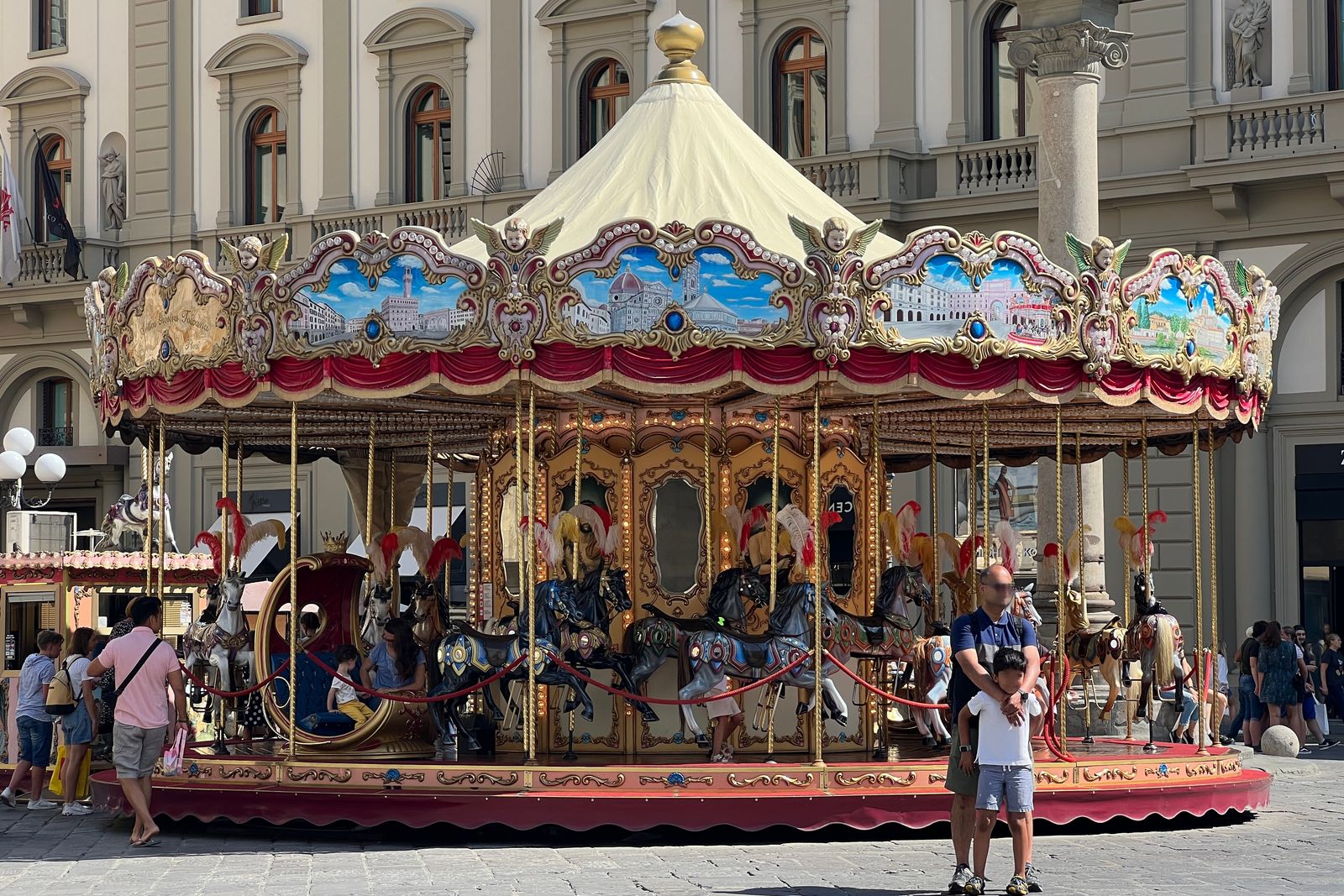
Access to the square is free and requires no ticket. The carousel, café tables and any hosted activities have separate costs and conditions.
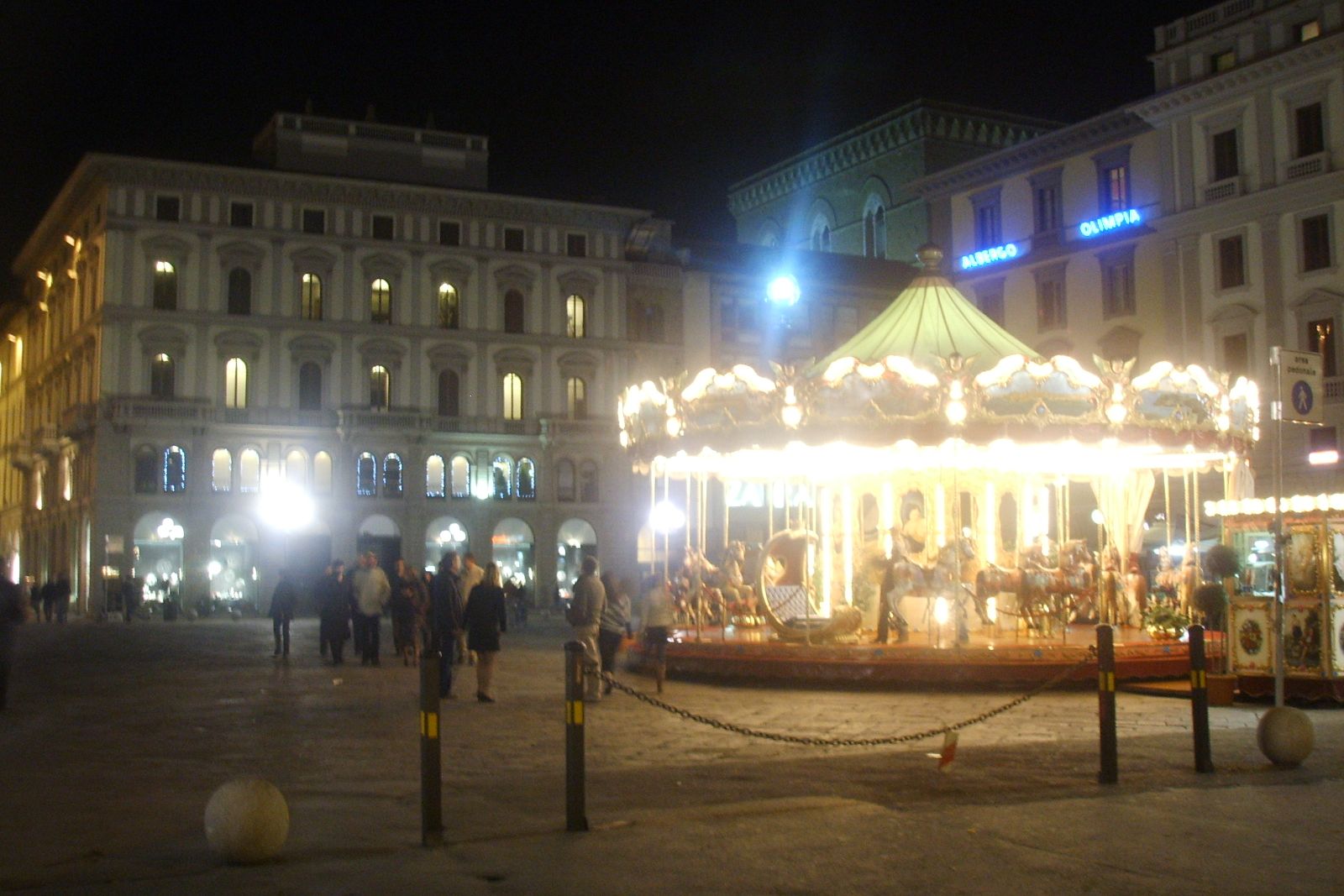
Early morning enhances the volumes and details with a quieter atmosphere. Between late afternoon and evening the square shows its liveliest, brightest side.
To read the square calmly, spot the Column of Abundance, observe the Arcone and take some photographs, allow about 20–45 minutes.
It is an open, largely pedestrian urban space. Historic paving and crowds may require extra attention; for specific needs check urban accessibility updates.
The central position naturally links the square to the pedestrian route between the station, the Duomo and the area of Piazza della Signoria. For buses, diversions and the ZTL, always rely on updated official sources.
From the station forecourt enter the historic centre and head towards the Duomo area; via Roma leads directly onto the north side of the square. It is a central walk, easy to combine with the rest of your visit.
Florence airport Amerigo Vespucci (FLR) is about 8 km from the centre. Tram line T2 connects the terminal to Florence S.M.N. station in about 20 minutes; from there the square is a 10-minute walk along the pedestrian axis of via Roma. Timetables and frequencies are on the official Florence tram website ↗.
Taxis licensed by the City of Florence are available at the airport and station ranks. A fixed official fare applies to the airport–city centre transfer; the journey takes about 20 minutes. Always check fares and authorised ranks on official sources, for example the Florence airport website ↗.
Urban line C2 serves a stop named “Piazza della Repubblica”. Routes and stops can change: check before you leave the official Autolinee Toscane ↗ website.
From Piazza del Duomo take via Roma south-west: Piazza della Repubblica lies on the natural pedestrian axis of the centre.
The square is in the historic centre and vehicle access is regulated. Do not set the navigator straight to the square without first checking the ZTL rules on the official FeelFlorence portal ↗.
Arriving at Galileo Galilei airport in Pisa (about 80 km away), reach Florence S.M.N. by PisaMover and regional train in about an hour and a half; then continue on foot or by bus. Routes and timetables are on the official Pisa airport website ↗.
This guide is independent and does not list the names of commercial venues: here you will find the types of services available in the area and what to expect, with a reminder to check hours, availability and prices on the spot.
Public toilet facilities are available in and around the square; opening hours and possible fees may vary. If needed, bars and restaurants in the area are the most common solution.
The square cannot be reached by car. Paid public car parks and interchange areas are available on the edge of the historic centre, connected by public transport.
The area offers bars, restaurants, trattorias, pizzerias and venues across every price range. This guide does not recommend names: choose freely among the types of venues you prefer.
Hotels, bed & breakfasts, guesthouses and short-term rentals are found in the historic centre and neighbouring districts. Always check conditions, reviews and stay rules.
Supermarkets, food markets, bakeries and neighbourhood shops are spread across the centre; nearby you will also find tobacconists, newsstands and various stores.
Fuel stations and electric vehicle charging points are mainly located along the city access routes, outside the pedestrian historic core.
Pharmacies, including night-duty service, and bank ATMs are present in the centre. Before your visit, check the opening hours of the nearest pharmacy.
The centre offers public Wi-Fi networks and many venues provide connection to customers. Mobile data coverage is generally good across the area.
No business is mentioned by name: references concern service categories only, in line with the non-commercial nature of the project.
The safest choice is to leave the car outside the most delicate core of the centre and continue by public transport or on foot. The city also points to interchange solutions and peripheral car parks linked to the urban network. Times, gates and ZTL rules can change: always check the official situation before entering the city ↗.
This guide does not select commercial venues. To find your way through Florentine food, here are some traditional preparations to recognise on menus and in the markets of the centre.
One of the street foods most linked to Florence, usually served in a sandwich with traditional condiments.
Flat bread baked with olive oil, plain or filled, widespread in everyday Tuscan cooking.
A rustic bread-and-vegetable soup of the tradition, especially associated with the cooler months.
The historic cafés of the square are part of its cultural story: between the 19th and 20th centuries they were meeting places for artists and writers.
Piazza della Repubblica is an ideal hub for exploring the historic centre on foot. When visiting the square you can easily reach the surrounding landmarks, including Piazza del Duomo, Piazza della Signoria, Palazzo Strozzi and Ponte Vecchio. The distances shown are indicative and depend on the route chosen.
Cathedral, Baptistery and Giotto’s Campanile form one of the central monumental complexes of the city.
Florence’s civic heart with Palazzo Vecchio and the Loggia dei Lanzi.
Great Renaissance architecture, today home to major cultural exhibitions.
The famous bridge over the Arno is reached by following the pedestrian route towards the south.
Current conditions and the next days at a glance, to plan what to wear and when to go.
Updated at 10:02 AM
Florence has a Mediterranean climate, with hot, dry summers and mild, rainy winters. The table summarises the reference mean pattern (30-year climatology) to help you choose the period.
| Season | Months | Weather | Comfort | Crowds | Tip |
|---|---|---|---|---|---|
| Spring | Mar–May | Mild and changeable, some rain. | Pleasant, ideal for walking. | Growing towards May. | Bring a light, comfortable layer for changing skies. |
| Summer | Jun–Aug | Hot and sunny, rarely rainy. | Hot at midday. | Peak visitors in July–August. | Go early morning or at sunset; seek shade at noon. |
| Autumn | Sep–Nov | Mild, with more frequent rain. | Very enjoyable for walks. | Calmer after September. | An umbrella helps: paving can get wet. |
| Winter | Dec–Feb | Cool and humid, frequent rain. | Cold in the early hours, often clear by day. | Low, except holidays. | Warm jacket for morning and evening; mind damp steps. |
Values are indicative and based on reference climatologies; daily conditions may differ. For the exact day, use the weather module at the top of this section.
The square is a pedestrian hub of the centre and fits easily into wider routes. Here are suggestions by group composition and by duration, to be adapted to your own pace.
The square is public heritage and a historic site lived in every day. A few simple rules help preserve it and share the space with residents and other visitors.
Do not climb on plinths, columns or street furniture; the historic stone is fragile and wears down.
Take your rubbish with you: bins are in the square, but the centre is busy all day.
Public fountains in the centre let you refill reusable bottles; use your own container.
The square is also a thoroughfare and local life: keep pavements and entrances clear.
Historic paving and crowds call for careful steps, especially with children or luggage.
It is in the historic centre of Florence, between via Roma, via Calimala, via degli Strozzi and via del Corso. The reference address is Piazza della Repubblica, 50123 Florence FI, Italy.
No. The square is an open public space and visiting it requires no ticket. Café tables, the carousel and any services or hosted activities remain separate.
To observe the Arcone, the Column of Abundance, the carousel and to read the history of the place, about 20–45 minutes are reasonable. A stop in the square or nearby can naturally extend the visit.
Early morning is pleasant for observing the architecture with greater calm; late afternoon and evening show the liveliest character of the square and its lights.
From the station forecourt you can reach the centre on foot following the axis towards the Duomo and via Roma, or use urban public transport. Before leaving, it is worth checking routes and diversions on the official Autolinee Toscane website.
The historic centre of Florence is subject to the ZTL. For those arriving by car it is generally easier to use external or interchange car parks and continue by tram, bus or on foot, first checking the updated rules of the City of Florence.
Yes. It is an open public space, freely accessible 24 hours a day. Events, installations or temporary works may at times change how the square can be used.
Within a few minutes’ walk you will find Piazza del Duomo, Piazza della Signoria, Palazzo Strozzi and Ponte Vecchio, all reachable on foot from the centre of the square.
Yes: around the square you will find service categories such as public toilets, ATMs, pharmacies (including duty pharmacies), shops and dining. As an independent guide we do not name specific venues; for hours and prices rely on updated local information.
Set the destination to “Piazza della Repubblica, 50123 Florence”. The square is in the historic centre and subject to the ZTL: if driving, leave the car in peripheral car parks and continue on foot or by public transport. The coordinates are 43.77151, 11.25402 and the map is embedded in the “How to get there” section.
In the “How to get there” section you will find the embedded Google Maps map and routes from the station, tramway, taxi, bus and the Duomo, with the address (Piazza della Repubblica, 50123 Florence) and coordinates. You can also open the direct map from the button at the top.
To connect this page unambiguously to the real place, name, address, coordinates, history and external links are kept consistent with authoritative institutional and regional sources.
For official updates and regional tourism information, visit Florence’s tourism portal (FeelFlorence) ↗ and Tuscany’s official tourism portal (Visit Tuscany) ↗.
Photo credits. The images are stored locally in the project and are not loaded from external photo hosts during browsing. Photographs selected from Wikimedia Commons: Chabe01 (carousel, CC BY-SA 4.0), Dimitris Kamaras (Arcone, CC BY 2.0) and Sailko (night view, CC BY-SA 3.0 / CC BY 2.5). Licences and source URLs are also listed in CREDITS.md. The images remain the property of their respective authors.
Rating note. The 4.6/5 rating and the count of 27,760 reviews shown in the structured data come from the Google Maps data provided for this project; they are indicative values and may change over time.